Light, medium, dark — what they actually taste like, who they're for, and a few myths we'd like to retire. 6 minutes.
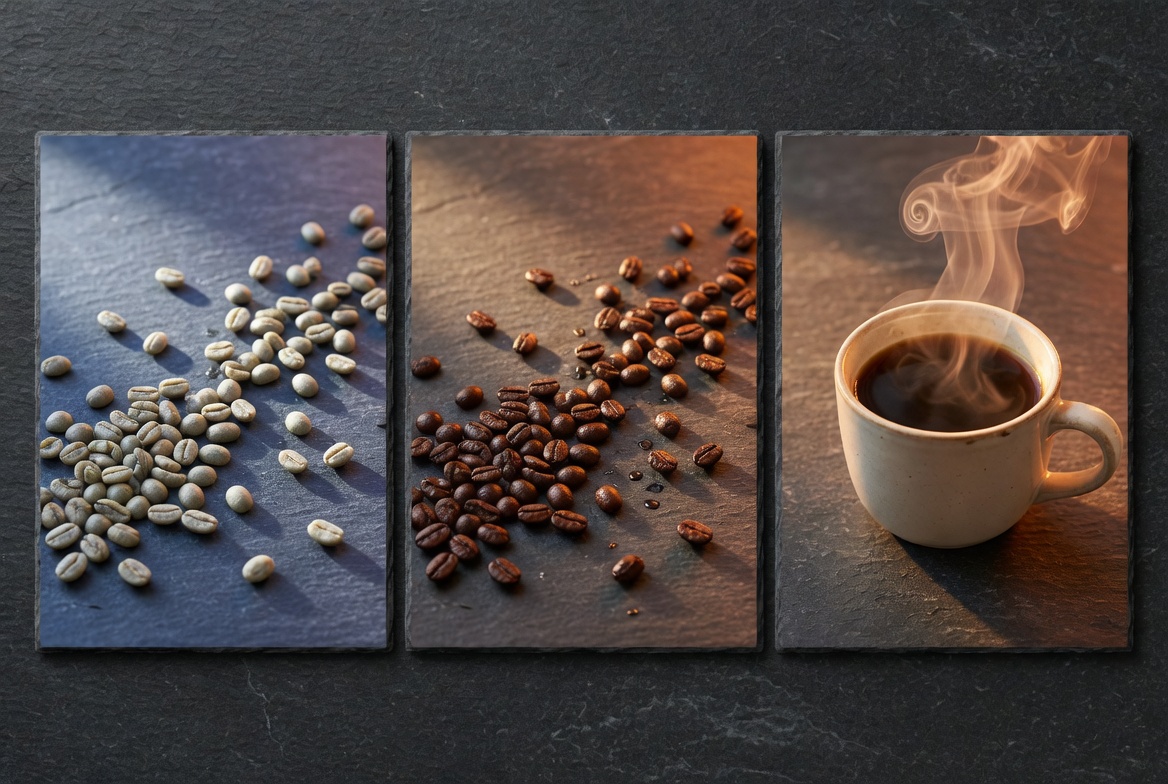
A coffee bean comes out of the harvest as a hard green seed. To make it drinkable, you roast it — heat it in a drum (usually 380°F–460°F) for 8–15 minutes, while it dries, browns, expands, and the sugars inside caramelize. The longer and hotter you roast, the further down that process you go.
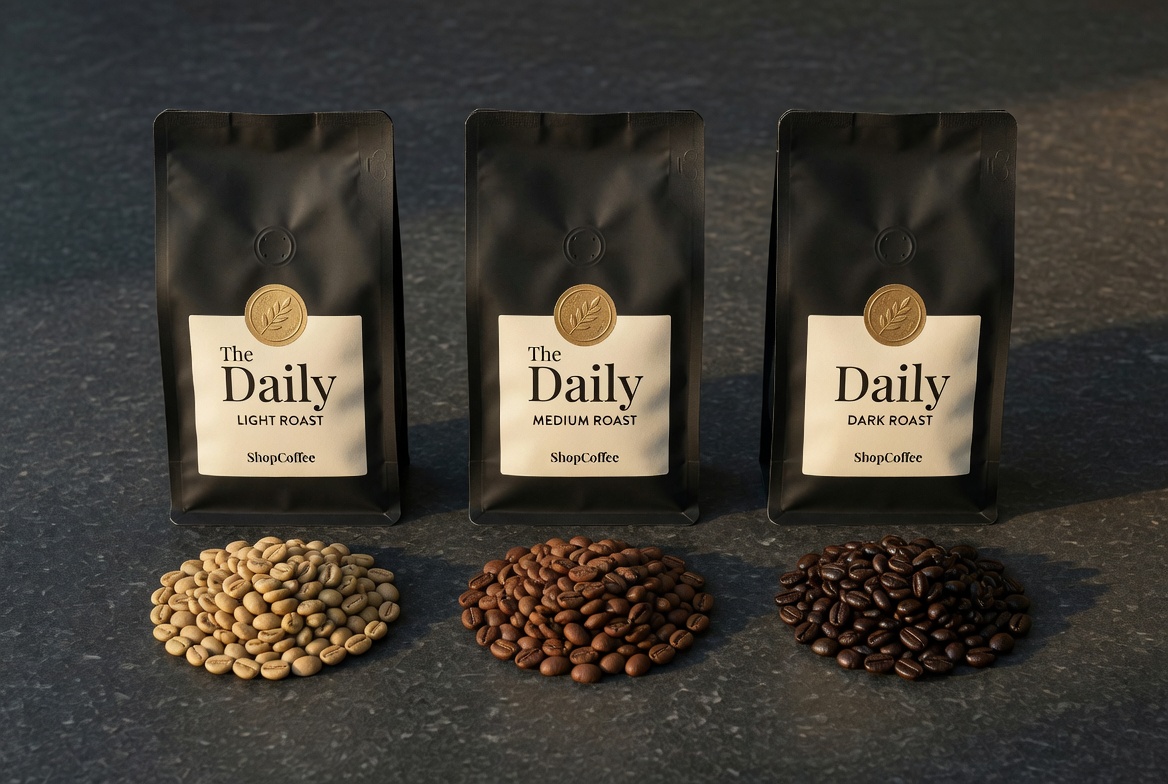
Lightly roasted beans stop early — soon after the "first crack" (a popcorn-like sound when steam fractures the bean's structure). They keep most of the original character of the green coffee: the brightness, the floral or fruit notes, the higher acidity. They look pale tan and feel dry.
Darkly roasted beans go further — past the "second crack," when the bean's oils start migrating to the surface. They lose much of the origin character and pick up the flavor of the roast itself: smoke, char, dark chocolate, bittersweet finish. They look almost black and feel oily.
Medium roast lives between the two cracks: enough development to round out acidity into balanced sweetness, not so much that you've roasted away the bean's personality. It's the most forgiving roast and the easiest to recommend without knowing your taste.
Tastes like: citrus, stone fruit, jasmine, honey, occasionally berry. The cup is lighter-bodied, more like a strong black tea than a syrupy mug. Acidity is the dominant note — pleasant when it's well-roasted, sour when it isn't.
Best for: people who think coffee tastes "the same" and want to find out it doesn't. The differences between origins (Ethiopia vs. Kenya vs. Colombia) show up most clearly at light roast. If you've ever had a coffee that genuinely tasted like fruit and thought "wait, what?" — that was probably a light roast.
Worst for: espresso machines unless you know what you're doing (light roasts are denser and harder to extract evenly), and anyone who likes their coffee with a heavy splash of cream — the cream walks all over the flavor.
Brew with: pour-over (V60, Chemex), Aeropress, or a careful drip. Slightly hotter water than usual (200–205°F) helps with extraction.
Try this: The Daily · Light — single-origin Ethiopia, light roast.
Tastes like: milk chocolate, caramel, toasted nuts, brown sugar, sometimes a hint of berry or citrus depending on the origin. Body is rounded. Acidity is there but tamed by sweetness. The most "coffee-like" coffee, in the sense most people mean.
Best for: the default cup. The bag that lives on your counter. Coffee for people who drink coffee without thinking too hard about coffee. Also the easiest to share with houseguests of unknown preference.
Worst for: nothing in particular, which is exactly why it's the answer when in doubt.
Brew with: anything. Drip machine, French press, pour-over, espresso, cold brew — medium roast plays well with every method. This is why it's the most-sold roast level in the U.S.
Try this: The Daily · Medium — single-origin Tanzania Arabica, medium roast.
Tastes like: dark chocolate, toasted walnut, molasses, sometimes a whisper of smoke. The body is heavy and the finish is long. Acidity is mostly roasted out.
Best for: espresso (it forgives uneven extraction better than light), morning cups that need to do half the work of waking you up, anything with milk or cream — the bold profile holds its own.
Worst for: showcasing origin character. By the time you've roasted French-dark, Sumatra and Ethiopia start tasting like cousins. If you want to learn how origins differ, dark is the wrong tool.
Brew with: espresso machine, French press, drip with a slightly coarser grind. Slightly cooler water (195–200°F) than light roast — the beans are more fragile and over-extract easily.
Try this: The Daily · Dark — single-origin Sumatra, dark French roast.
"Dark roast has more caffeine." The opposite, actually. Light roast retains slightly more caffeine because the longer roasting process slowly degrades caffeine content. The difference is tiny in practice — but if you're optimizing for caffeine, lean light, not dark.
"Italian/French roast = better." "Italian," "French," "Vienna," "City" are all just roaster names for points on the dark spectrum. None is "better." They reflect a roaster's house style, not a quality grade.
"Light roast is for amateurs." Light roast is actually harder to roast well — there's less margin between "underdeveloped sour" and "balanced bright." Most third-wave specialty roasters favor light because it shows off the green coffee's quality. If you've avoided light roast because of one bad cup, try a roaster that takes it seriously.
"Espresso beans are a different bean." No. "Espresso roast" usually just means a darker roast (and sometimes a blend optimized for espresso machine extraction). You can pull espresso from any bean — and pour-over any "espresso" bean. The bag is just describing the roaster's intent.
Honest answer: freshness. A great light roast that's three months old will taste duller and flatter than an okay medium roast that was bagged last week. Coffee starts losing its volatile aromatics within days of roasting and is past its peak by about 30 days. Most supermarket coffee — regardless of roast level — was roasted months ago and shipped through a distribution warehouse before you saw it.
This is why our standard is the roast date on every bag, and why we only roast when you order. The roast level you pick matters; the date next to it matters at least as much.
Imagine your favorite morning coffee. Pick the description that fits closest: